


Most leads do not need a clever sales speech. They need to feel seen, understood and safely guided to one clear next step.
This is a small operating system for enquiries arriving through WhatsApp, Instagram, your website or the phone. It is designed for service businesses that cannot keep every salesperson online all day—but still want every serious buyer to receive a confident experience.
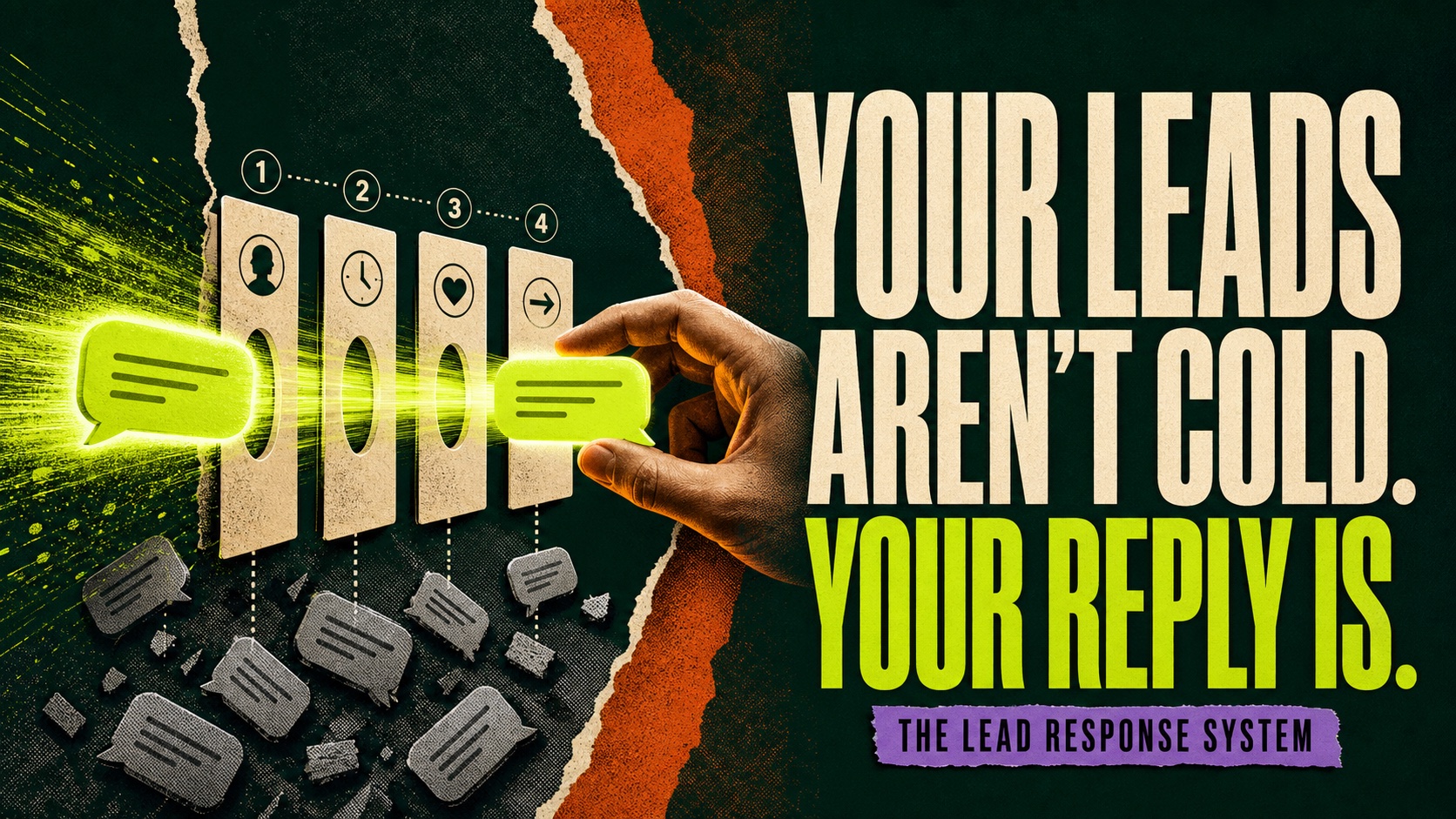
Confirm that a real person has understood the request.
Collect only the details needed for the next decision.
Answer the immediate question before asking for commitment.
Offer a call, quote, booking or specific follow-up time.
Same enquiry. Completely different feeling.
Aisha messages two suppliers: “Can you help with an event next month?” One replies, “Send details.” The other replies, “Yes—we may be able to help. Which date, location and approximate guest count? Once I have those three details, I can confirm availability and the right package.” One creates work for Aisha. The other creates a path.
First, sort the enquiry—not the person
A short question does not mean a low-quality lead. People often begin with “price?” because they do not know what information you need. Use the message to choose the next action.
They mention a need, timeframe, location or quantity. Respond personally and move toward availability, a call or quote.
The request is real but incomplete. Ask two or three easy questions together—not one question across six messages.
They want options, price context or examples. Give a helpful range or guide, then offer a low-pressure next step.
Say so kindly. If possible, suggest the right type of provider or resource. A respectful “no” still builds reputation.
Use the CARE reply
| Move | What it does | Example |
|---|---|---|
| C · Confirm | Reflect the real need | “Yes, we handle product photography in Muscat.” |
| A · Ask | Collect essential context | “How many products, and when do you need the final images?” |
| R · Reassure | Remove one doubt | “We can share a clear shot list before the session.” |
| E · Establish | Name the next step | “Send those details and I’ll confirm the right package today.” |
“Hi [name]—thanks for reaching out about [specific need]. I can help you check the right option. Could you share [two essential details]? Once I have those, I’ll [specific next action] by [clear time].”
Three scripts worth saving
“I’ve seen your message and want to answer it properly. I’m with a client now; I’ll reply with the options before 3:00 pm today.”
“Packages usually change with scope. If you send quantity, location and date, I can give you the relevant range instead of a misleading number.”
“Just checking whether you still need help with [need]. If the timing changed, no problem—I can close this for now or help with a new date.”
“Thank you for checking with us. We are not the right fit for this request because [brief reason]. You may need a provider who specialises in [direction].”
Design the handoff when one person cannot finish
Pass these five things
- Name and preferred contact
- Need and desired outcome
- Date, area and budget context
- What has already been promised
- The next action and its owner
Never make them repeat
- “Please explain again”
- Unclear staff ownership
- Forwarded screenshots alone
- Different prices from each person
- No promised reply time
Make follow-up feel helpful, not hungry
A follow-up should add clarity. Repeat messages such as “Any update?” put all the work back on the buyer. Instead, attach a useful reason to return.
“Hi Aisha—I held the Thursday slot while waiting for the venue details. I can keep it open until tomorrow afternoon. Would you like the compact option or the full setup quotation?”
Your lead scoreboard
Do not reward the team only for replying quickly. Track whether the reply collected the right information, whether a next step was agreed, and why opportunities were lost. A small weekly review will reveal repeated problems in pricing, availability, clarity or lead source.
The one-page setup
Build this before the next campaign sends traffic.
A response system should still sound human
Templates remove hesitation; they should not remove personality. Use the customer’s name, reflect the actual request, delete irrelevant lines and make promises your team can keep. The best system does not make every reply identical. It makes every experience reliably thoughtful.
Getting replies but still missing sales? Use the lead-quality investigation and OMR calculator to trace enquiries through to paying customers.