



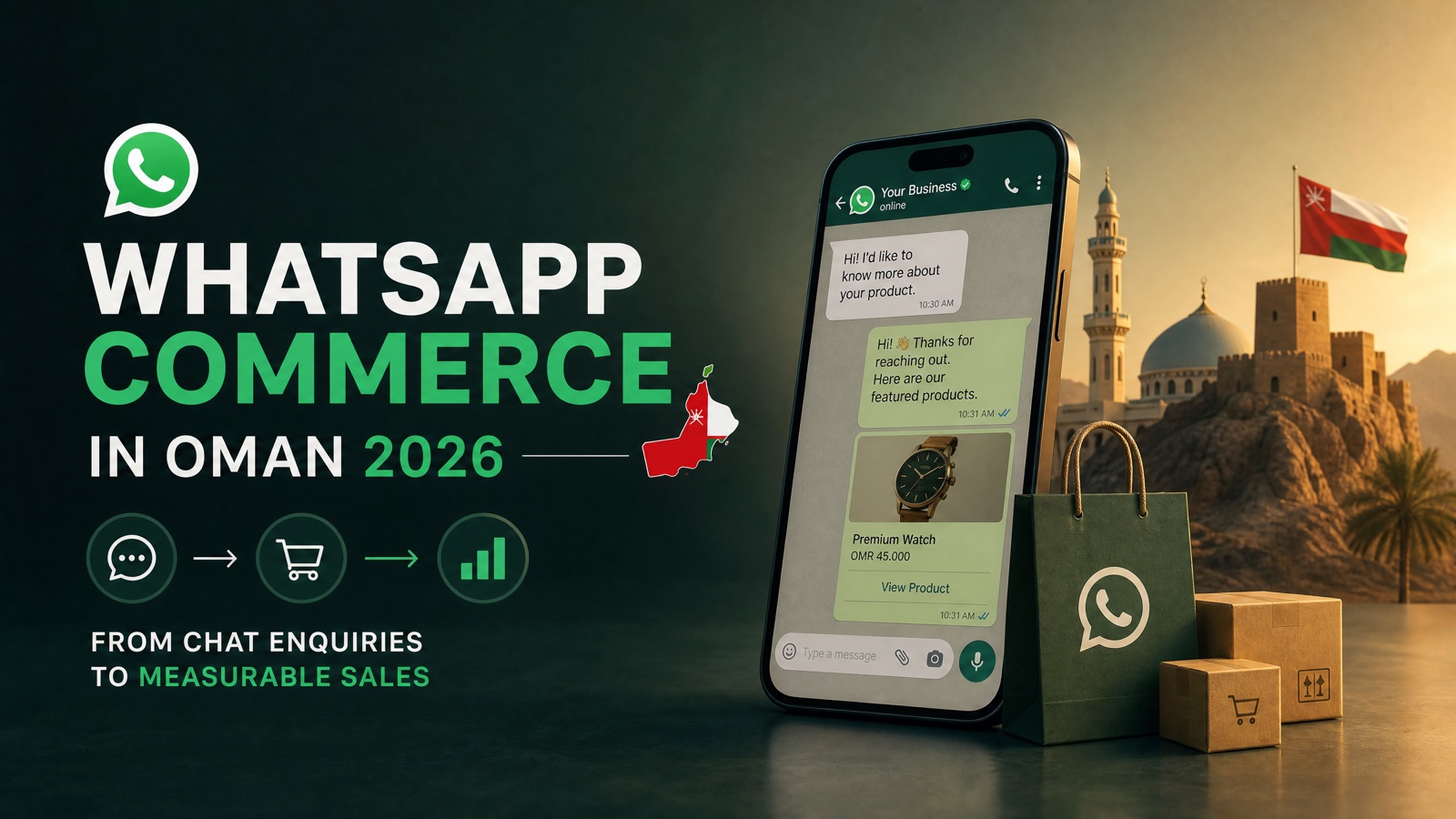
In Oman, “message us on WhatsApp” is already a familiar call to action. The next change is bigger: the conversation itself is becoming the shop. Customers can discover a product, ask whether it is available, compare options, book, order, receive updates and request support without navigating a complicated website.
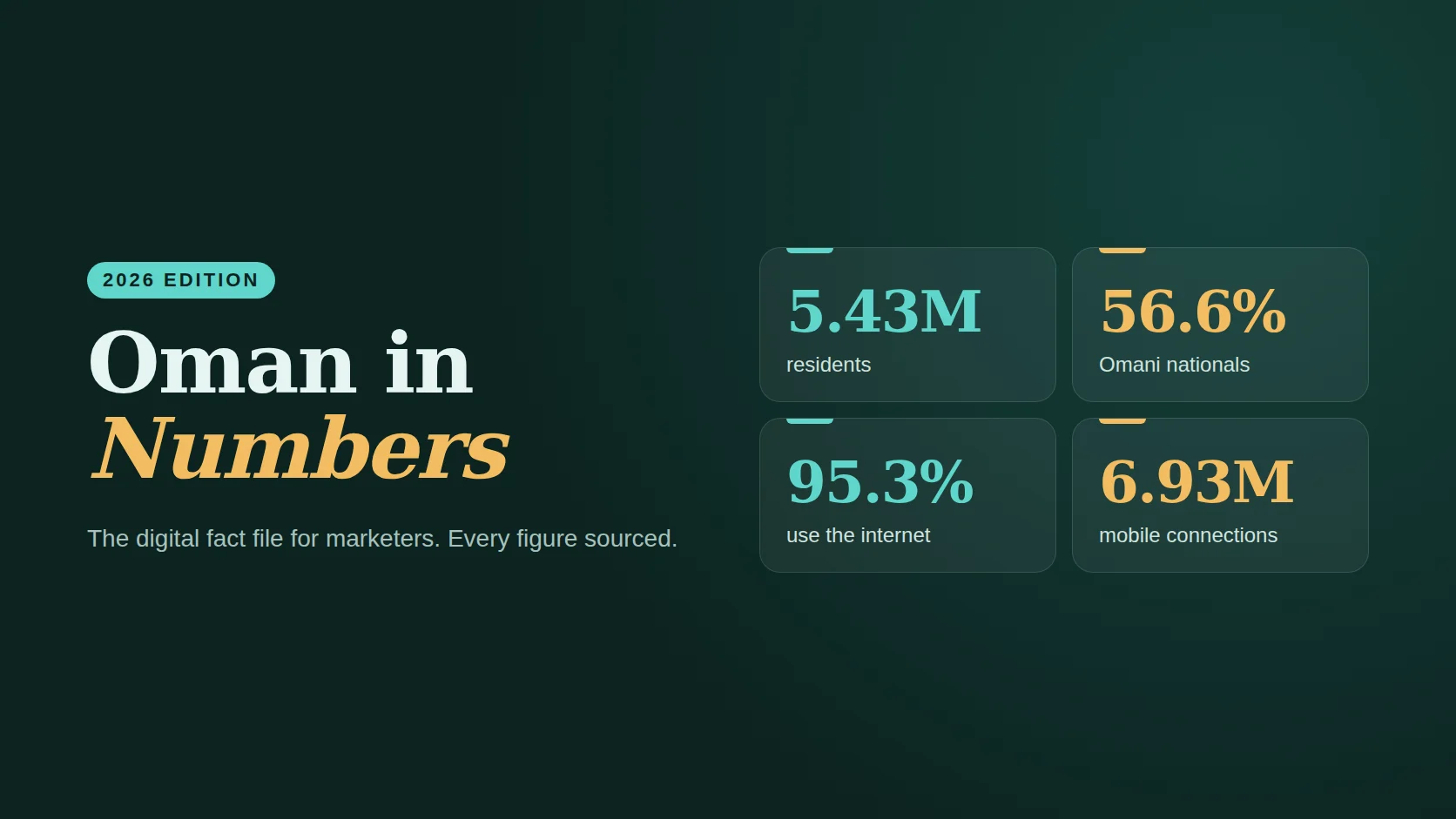
That shift is timely. DataReportal’s Digital 2026 Oman report estimates internet penetration at 95.3 percent, while recent reporting in Oman describes local businesses moving more of the buying journey into messaging. Meta is also expanding business agents that can answer questions, recommend products and connect with commerce and support systems—although exact features and availability vary by market and account.
The opportunity is not “add a chatbot.” It is to design a short, trustworthy path from customer intent to a completed outcome, with a person available when automation reaches its limit.
What conversational commerce actually means
Discover
Ad, search, social or referral
Understand
Need, location, budget, timing
Choose
Product, service or appointment
Complete
Order, payment or booking
Support
Status, changes and human help
The customer should not have to repeat the same information at every step. If automation asks for a vehicle model, preferred clinic, delivery wilayat or property budget, the human agent should see that context when taking over.
Choose one job before building the system
A WhatsApp setup becomes messy when it tries to sell everything, answer everything and support everyone on day one. Start with one valuable, repeatable journey:
- Retail: find a product, confirm stock, choose delivery and create an order.
- Clinic: choose service, location and preferred appointment time, then hand off for confirmation.
- Automotive: select model and service, collect registration details and request a booking.
- Real estate: qualify area, budget, property type and move-in timeline before agent handoff.
- Home services: capture location, problem, urgency and photos before assigning a technician.
Build the foundation before adding AI
1. A complete business profile
Keep name, opening hours, locations, description and contact routes accurate. Automation will amplify inaccurate information just as efficiently as correct information.
2. A maintained catalogue or service list
Use clear names, current prices or price ranges, variants, availability rules and useful images. If prices change daily, define how and when the source is updated.
3. One owner for conversation quality
Someone must review unanswered questions, incorrect replies, slow handoffs and lost orders. “The AI handles it” is not ownership.
4. A defined order record
Every serious transaction should receive an order, booking or lead ID outside the chat. The conversation is the interface; it should not be the only database.
Where AI helps—and where it should stop
| Good automation task | Better human task |
|---|---|
| Opening hours, location and basic availability | Exceptions, complaints or unclear policies |
| Guided product or service discovery | High-value recommendations requiring judgement |
| Collecting structured qualification details | Negotiation, sensitive information or complex eligibility |
| Booking request and order-status updates | Changing a disputed order or resolving payment failure |
| Frequently asked questions from approved content | Anything the approved source cannot answer confidently |
Use confidence thresholds and a visible escape route such as “Talk to a person.” Human handoff should include the conversation summary and captured fields, not send the customer back to the beginning.
A response design that feels useful
Weak opening: “Hello, how can we help?”
Stronger opening: “Welcome. I can help you check products, delivery, an existing order, or connect you with our team. Which do you need?”
The stronger version gives people a quick path without pretending every question fits a button. Keep choices short, write in natural English and Arabic where appropriate, and let customers type freely.
Design principles
- Ask one question at a time.
- Explain why sensitive or unusual information is needed.
- Do not request details already provided.
- Confirm the final selection before creating an order or appointment.
- Show what happens next and when a person will respond.
- Use plain language instead of internal department names.
Connect advertising without creating chat chaos
Click-to-message ads can produce high intent, but the opening message must match the ad. A customer who clicks “Book an AC service in Muscat” should not enter a generic menu for ten unrelated services.
- Create a source-specific WhatsApp link or ad entry point.
- Pre-fill context only when it helps the customer.
- Use a campaign or entry-point ID in your lead record.
- Route the conversation to the matching flow or team.
- Return completed outcome and revenue data to your reporting system.
Also protect capacity. If a campaign can create 500 chats but the team can handle 80, the result is not scale—it is delayed replies and wasted spend.
Measure business outcomes, not message volume
Qualified conversation rate
Conversations that match your service, geography and buying criteria.
Time to useful response
How quickly the customer receives an answer that moves them forward.
Conversation-to-sale rate
Chats that become confirmed orders, bookings or paid transactions.
Add revenue per conversation, handoff rate, unresolved rate, opt-out rate, repeat purchase rate and customer satisfaction where they fit. Review results by campaign source and journey type, not only as one WhatsApp total.
Consent and customer trust
A person asking about an order has not necessarily agreed to promotional broadcasts. Oman’s data-protection Executive Regulation states that businesses should obtain written consent before sending advertising or marketing material, identify the sending method, provide an opt-out and stop when requested. Keep service messages and marketing choices distinct.
- Record when and how marketing consent was given.
- Explain the type and frequency of promotional messages.
- Process opt-outs across every connected tool.
- Limit staff access and avoid exporting chats or customer lists casually.
- Do not feed sensitive customer conversations into unapproved AI tools.
For a deeper operational checklist, read the Oman data privacy guide for marketers.
A four-week pilot plan
| Week | Focus | Deliverable |
|---|---|---|
| 1 | Choose one journey and analyse twenty real customer conversations | Question map and success definition |
| 2 | Build catalogue, approved answers, fields and human handoff | Working internal prototype |
| 3 | Test normal cases, edge cases, Arabic/English wording and opt-outs | Issue log and revised flow |
| 4 | Launch to a limited traffic source and measure outcomes daily | Pilot report and scale decision |
Official and current references
DataReportal: Digital 2026 Oman
Meta: Business Agent announcement and capabilities
Meta: Centralized campaigns, AI support and business messaging
Oman Executive Regulation of the Personal Data Protection Law
Final takeaway
The winning WhatsApp commerce experience is not the one with the most automation. It is the one that understands intent quickly, gives accurate information, remembers context, completes a useful outcome and hands the customer to a person without friction. Start with one journey, measure completed business, and expand only after the basics work.