

Your customer rarely follows the neat funnel in your presentation. They zigzag, compare, disappear, return—and then ask one tiny question before buying.
This field guide follows an imaginary Muscat customer named Mariam. The story is fictional; the friction is familiar. Use it to inspect where your own customer journey becomes confusing, slow or impossible to measure.
Location, relevance, reviews and an immediate reason to trust.
Recent work, real people, proof of quality and a consistent identity.
Clear offer, useful detail, price context and answers to risk questions.
A quick human answer and one obvious next step.
Mariam does not “convert.” She investigates.
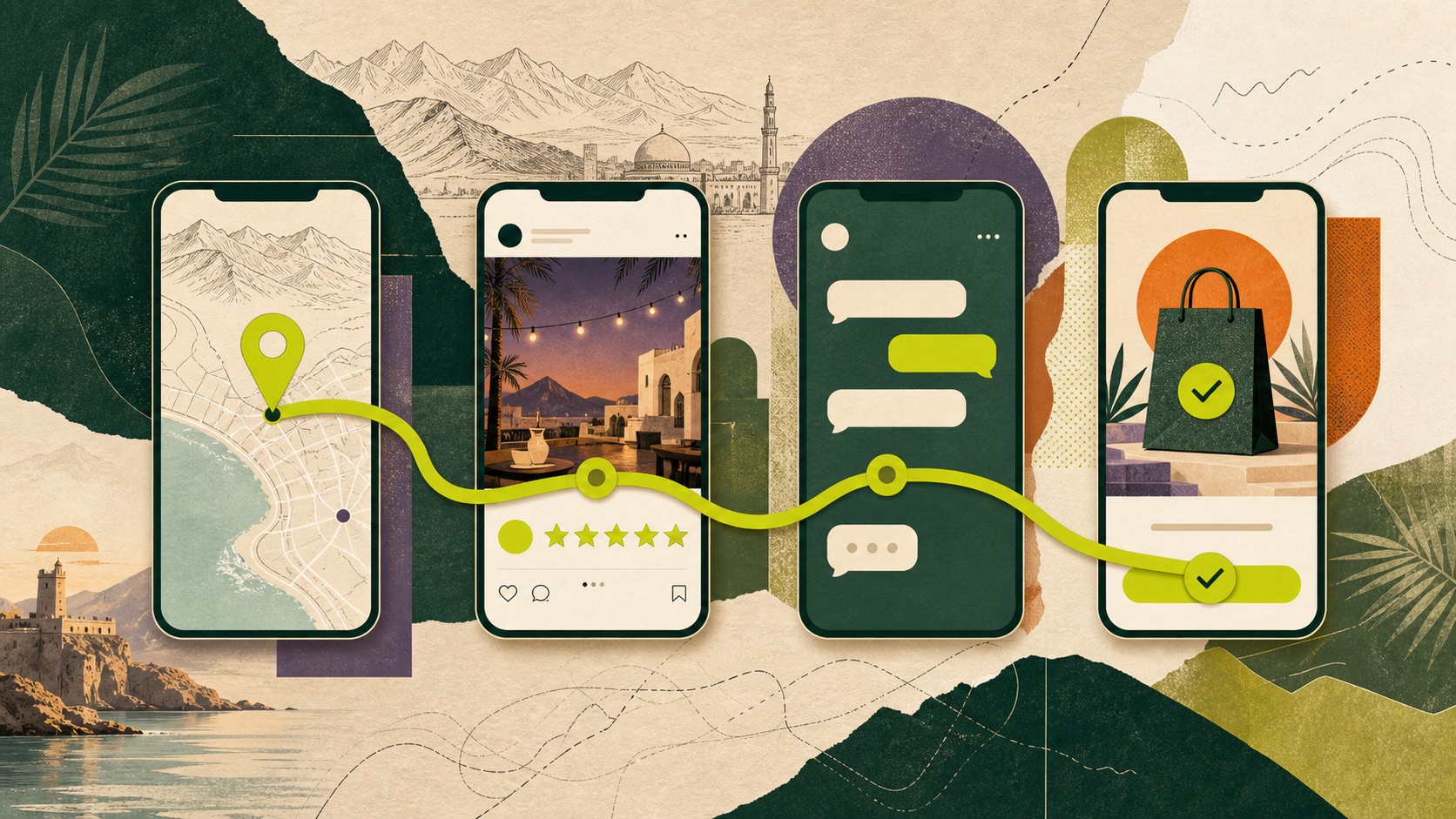
She searches for a service near Al Khuwair, opens three Maps results, rejects one with outdated photos, checks another business on Instagram, visits its service page, then sends a WhatsApp message: “Can you do this by Thursday?” The winning brand did not dominate one channel. It removed doubt at every handoff.
The four handoffs that decide the sale
Match the search with the correct category, accurate hours, service details, strong recent photos and useful review replies.
Make social links and brand names consistent. A visitor should recognise the same business within one glance.
Link to the exact service or product page—not a vague homepage that asks the visitor to restart.
Give one clear action: message, call, book or visit. Explain what happens immediately after the tap.
What Mariam is silently asking
Signals that reduce doubt
- Do you serve my location?
- Can I see recent, relevant work?
- Is the price range realistic for me?
- Can I trust you with my time?
- What is the easiest next step?
Friction that sends her away
- Different names or phone numbers
- Old posts and missing hours
- Stock photos without proof
- “Contact us” without context
- A slow or generic reply
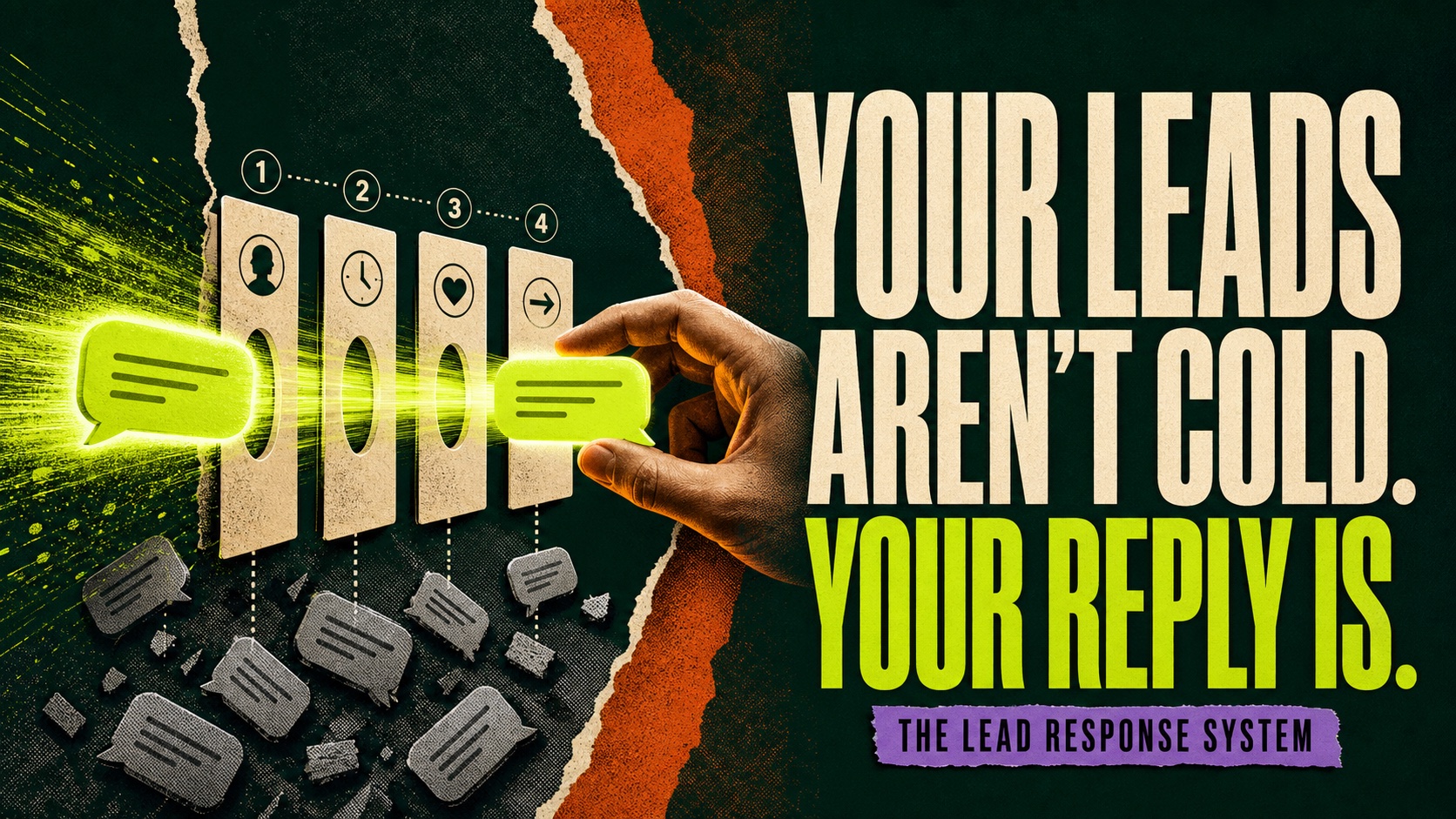
A better “message us” handoff
People hesitate when a button opens an empty chat. Give the conversation a useful starting point.
Button: Check availability on WhatsApp
Pre-filled message: “Hi, I’m interested in [service]. My area is [location], and I need it around [date]. Could you tell me the next step?”
The message collects context without turning the chat into a form. Your team can answer the real question instead of beginning with “How may we help you?”
Build one measurement trail
Google Business Profile performance can show interactions including website clicks, calls and direction requests. Use tagged website links where possible, and record the source inside your lead sheet or CRM. The goal is not perfect surveillance; it is enough evidence to see which paths create qualified conversations.
| Touchpoint | Question to answer | Simple evidence |
|---|---|---|
| Google / Maps | Are people finding and choosing us? | Search terms, calls, website clicks, directions |
| Social proof | Does our recent work build confidence? | Profile visits, saves, replies, assisted enquiries |
| Website | Can visitors understand the offer? | Service-page engagement and CTA clicks |
| Conversation | Did the enquiry become a real opportunity? | Qualified leads, bookings, sales and lost reasons |
Your 20-minute journey audit
Open your phone and behave like a new customer.
Platform note: Google documents that Business Profile performance can include calls, website clicks and direction requests, while complete information, reviews, photos and videos help customers evaluate a business. Read the official performance guide and local visibility guidance.
Keep this principle
A channel does not win the customer alone. The journey wins when every touchpoint recognises the last one, answers the next question and makes the following step feel safe. Audit the handoffs before buying more reach.