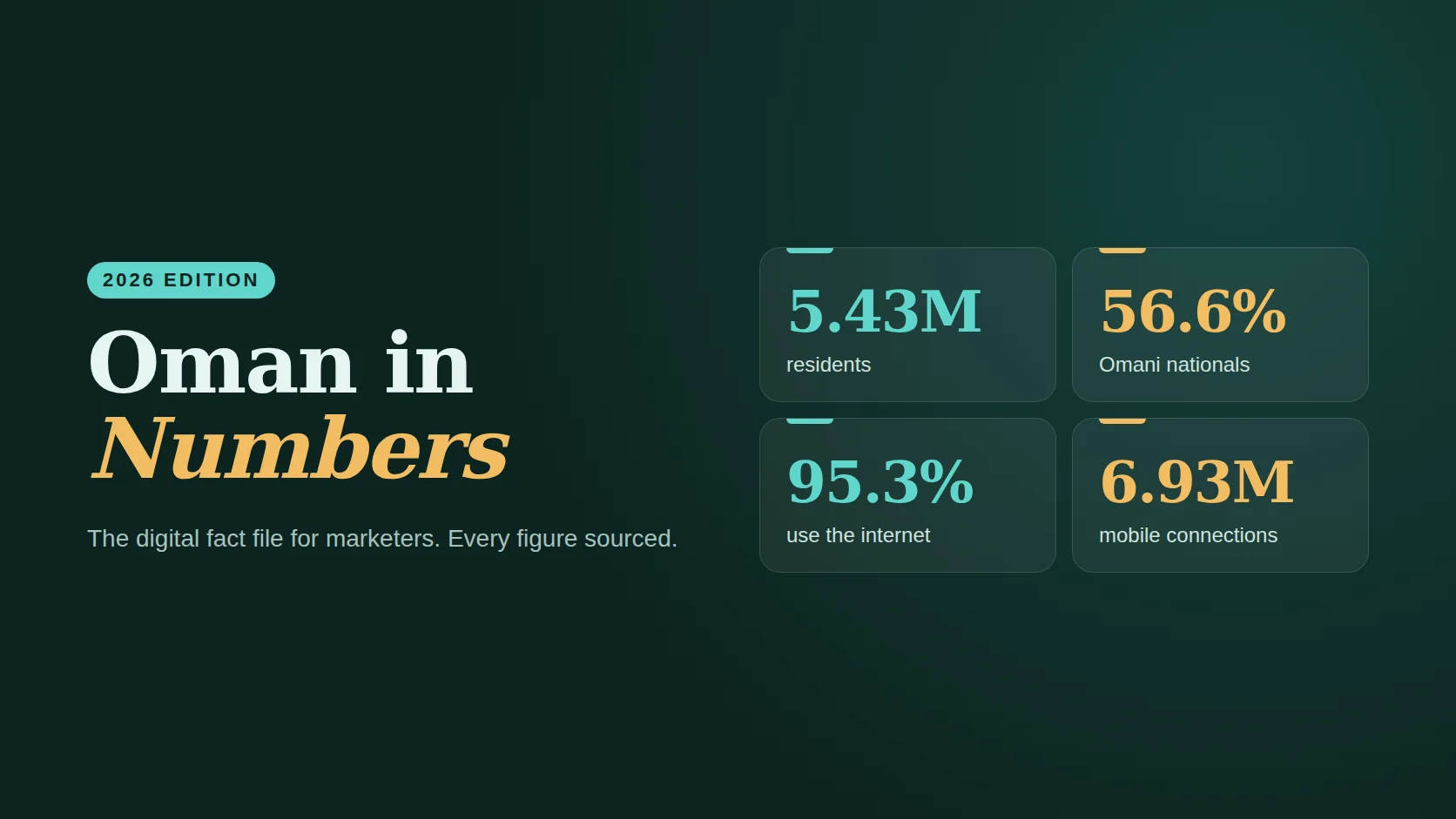
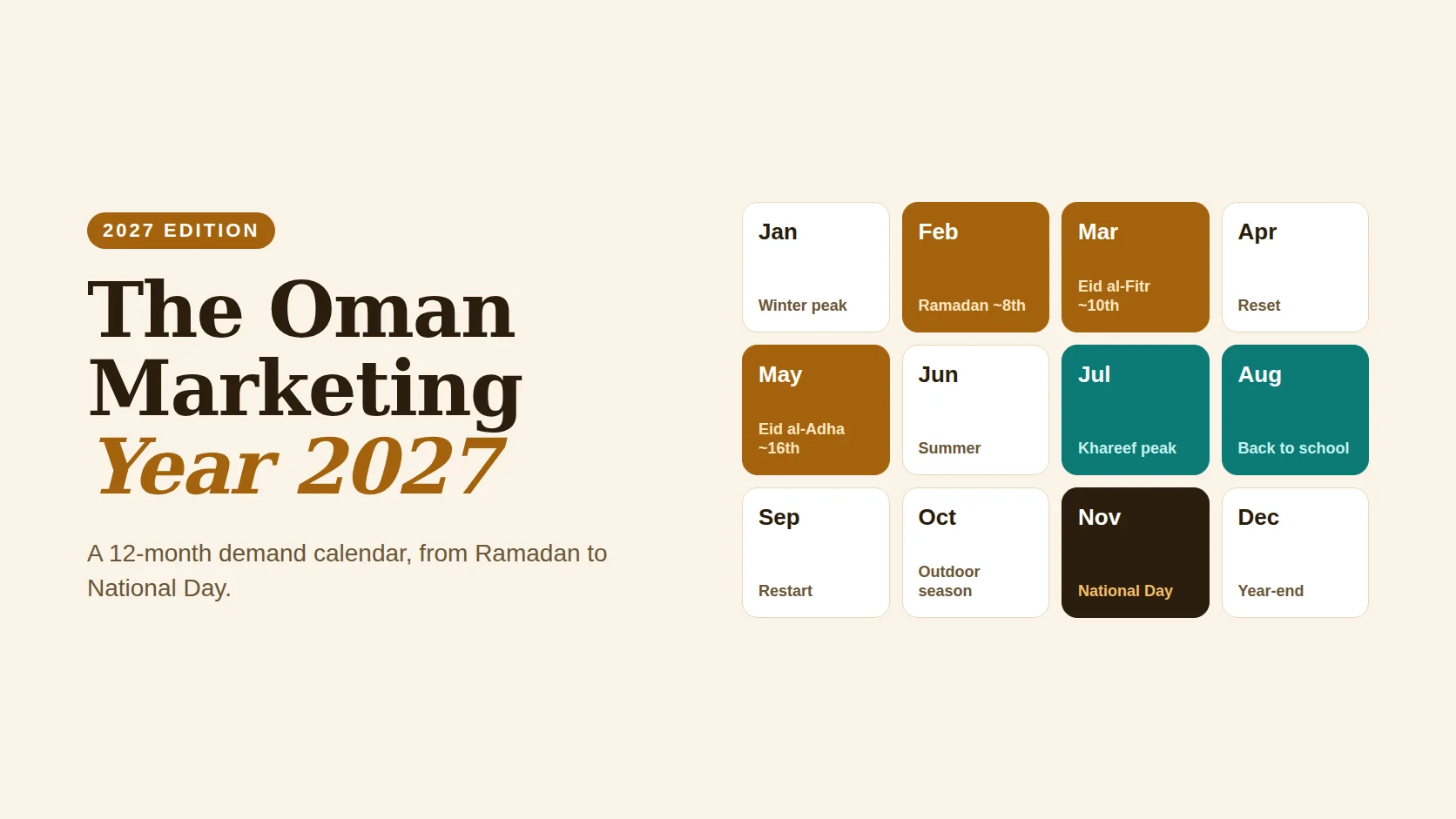



Government programmes can feel far from the daily work of a shop or an agency. This one is closer than most. Its priorities are things small businesses already deal with: selling online, getting paid digitally, using software and, increasingly, AI. When a government sets targets in these areas, it brings support schemes, procurement and investment that follow them.
- The digital economy is about 9% of Oman’s GDP; Omanisation in the tech sector is around 72%.
- Phase two focuses on e-commerce, e-payments, SME digitisation and AI.
- The National E-commerce Plan is 87% complete, with 26 of 30 initiatives done.
- For businesses: expect more support, competition and customer expectations online.
What the plan covers
| Item | Detail |
|---|---|
| Launched | 22 October 2026 |
| Period | 2026 to 2030 |
| GDP contribution target | RO 1.5 billion by 2030 |
| Technology investment | RO 300 million |
| Jobs | 3,000 direct jobs a year |
| Focus | E-commerce, e-payments, SME digitisation, artificial intelligence |
| Where it stands | Digital economy about 9% of GDP; e-commerce plan 87% complete |
Sources: Oman Observer, Intelligent CIO, People Matters and Muscat Daily.1235
What it means for businesses
Customers will expect to buy online
As more shops sell online and digital payments get cheaper, a business without online ordering or a QR payment option starts to look old.
Trust becomes a ranking factor
Verified stores, clear return policies and fast responses separate real sellers from the rest. The Maroof verified e-store mark is part of this.
Support follows the priorities
Programmes for SME digitisation and AI adoption tend to come with grants, training and procurement. Businesses with a clear digital plan are first in line.
Local talent is a selling point
With a 72% Omanisation rate in tech and 3,000 jobs a year targeted, working with Omani digital talent fits both the policy and the market.
Is your business ready for Oman’s digital push?
Tick what you already have.
Runs in your browser; nothing is saved.
Next steps
- Fix the basics first: online ordering, digital payments and a complete Google profile.
- Register and verify your online store so customers and platforms can trust it.
- Watch for support schemes from the Ministry of Transport, Communications and Information Technology and SME bodies.
- Pick one AI use that saves real time, such as answering common customer questions in Arabic and English.
When a government sets digital targets, customers’ expectations rise with them.
Related: free transfers and QR payments in Oman, Oman tourism goes digital and Oman retail in Q4.
Common questions
What is phase two of Oman’s National Digital Economy Programme?
It is the 2026–2030 phase launched on 22 October 2026. It targets a RO 1.5 billion GDP contribution from the digital economy by 2030, RO 300 million of technology investment and 3,000 direct jobs a year.
What does the programme focus on?
E-commerce, electronic payments, digitising small and medium-sized businesses and artificial intelligence.
How big is Oman’s digital economy?
Reports on the launch put the digital economy at about 9% of GDP, with Omanisation in the technology sector at around 72%.
What should small businesses in Oman do?
Offer online ordering and digital payments, complete and verify online listings, keep a customer list, track sales by channel and adopt practical AI tools. These match the programme’s priorities and rising customer expectations.
Sources
Checked November 3, 2026.
- Oman Observer, “Oman’s digital economy targets 3,000 jobs a year”, October 2026. omanobserver.om
- Oman Observer, “RO 300m digital investment, 3,000 annual jobs targeted”, October 2026. omanobserver.om
- Intelligent CIO, “Oman targets OMR 300 million in technology investment”, 26 October 2026. intelligentcio.com
- People Matters, “Oman targets 3,000 annual digital jobs as tech Omanisation rises to 72%”. peoplemattersglobal.com
- Muscat Daily, “E-commerce roadmap nears completion as Oman expands digital economy”, 8 August 2026. muscatdaily.com