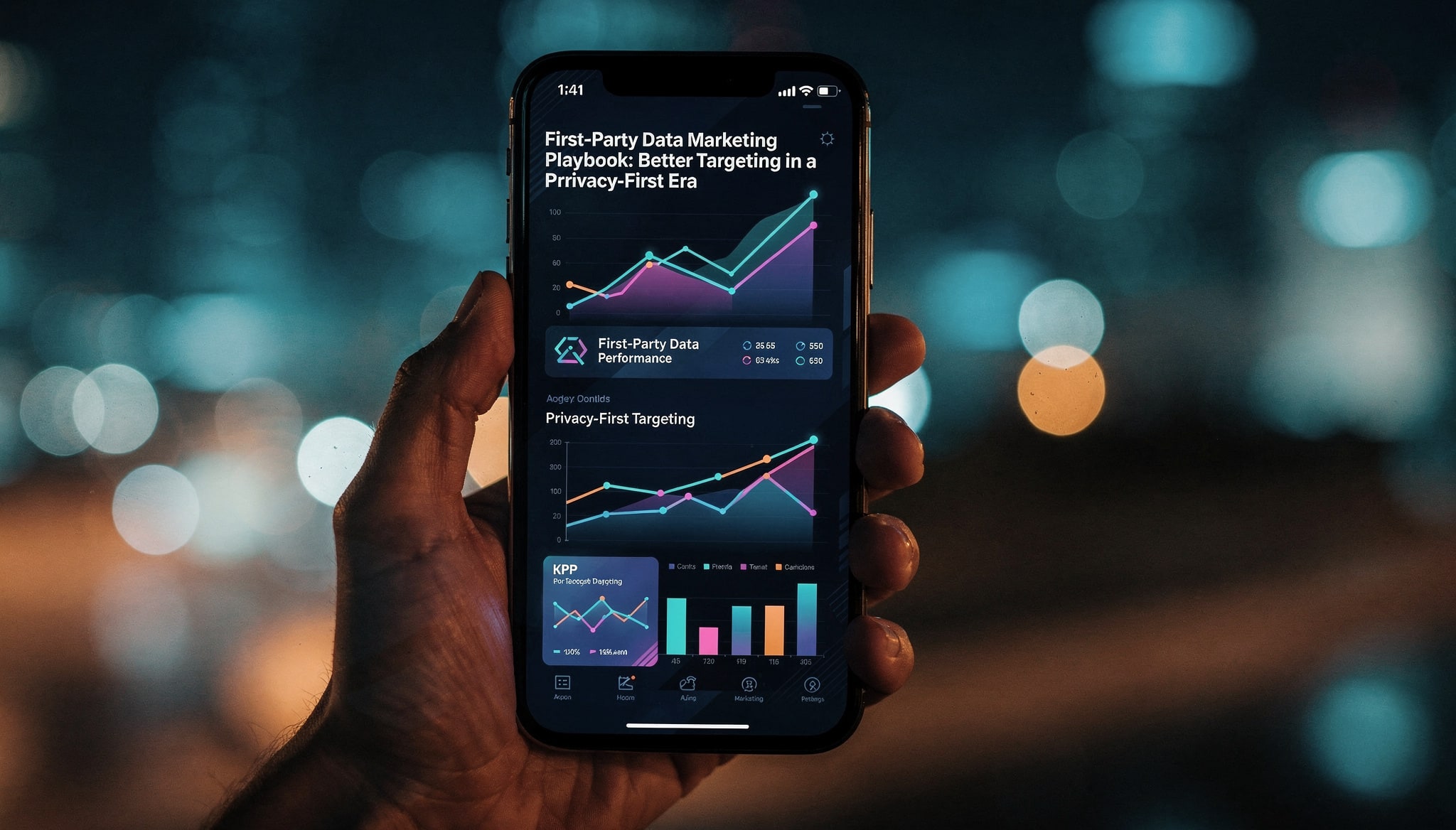
As third-party tracking weakens, first-party data becomes a competitive advantage. The teams that win are not just collecting emails, they are building a structured data system that improves segmentation, ad efficiency, and retention.
What first-party data should include
- Identity data: email, phone, account IDs
- Behavior data: viewed pages, product interest, session patterns
- Transaction data: order history, average order value, lifecycle stage
- Preference data: channel choice, category interests, frequency tolerance
Step 1: Build ethical collection points
Collection should feel useful, not intrusive. Offer value exchange through calculators, templates, checklists, or personalized recommendations.
- Lead forms with clear benefit
- Newsletter capture with topic preferences
- Checkout opt-in flows
- Post-purchase profiling surveys
Privacy Principle: Collect less, label better, activate smarter.
Step 2: Standardize data architecture
- Define naming conventions for events and properties.
- Map data fields across analytics, CRM, and ad platforms.
- Create one source of truth for lifecycle stage labels.
- Set refresh frequency for critical segments.
Step 3: Create high-impact segments
- High-intent non-buyers
- New customers within first 30 days
- Lapsed high-value customers
- Category-specific repeat buyers
Step 4: Activate across channels
Email and lifecycle automation
Use behavior-triggered flows instead of static newsletters.
Paid media suppression and lookalikes
Exclude converted users and build quality seed audiences.
On-site personalization
Adapt messaging based on lifecycle stage and category interest.
Step 5: Measure with practical attribution
- Track first touch and assisted touch impact.
- Measure blended CAC by segment, not only by channel.
- Monitor retention and repeat purchase rate as core outcomes.
90-day implementation roadmap
- Month 1: data audit and event standardization
- Month 2: build top 4 segments and activation flows
- Month 3: optimize targeting, suppression, and retention journeys
Final takeaway
First-party data is no longer a technical side project. It is a growth system. With clean architecture, useful segmentation, and channel activation discipline, marketing becomes more efficient even in a privacy-first environment.